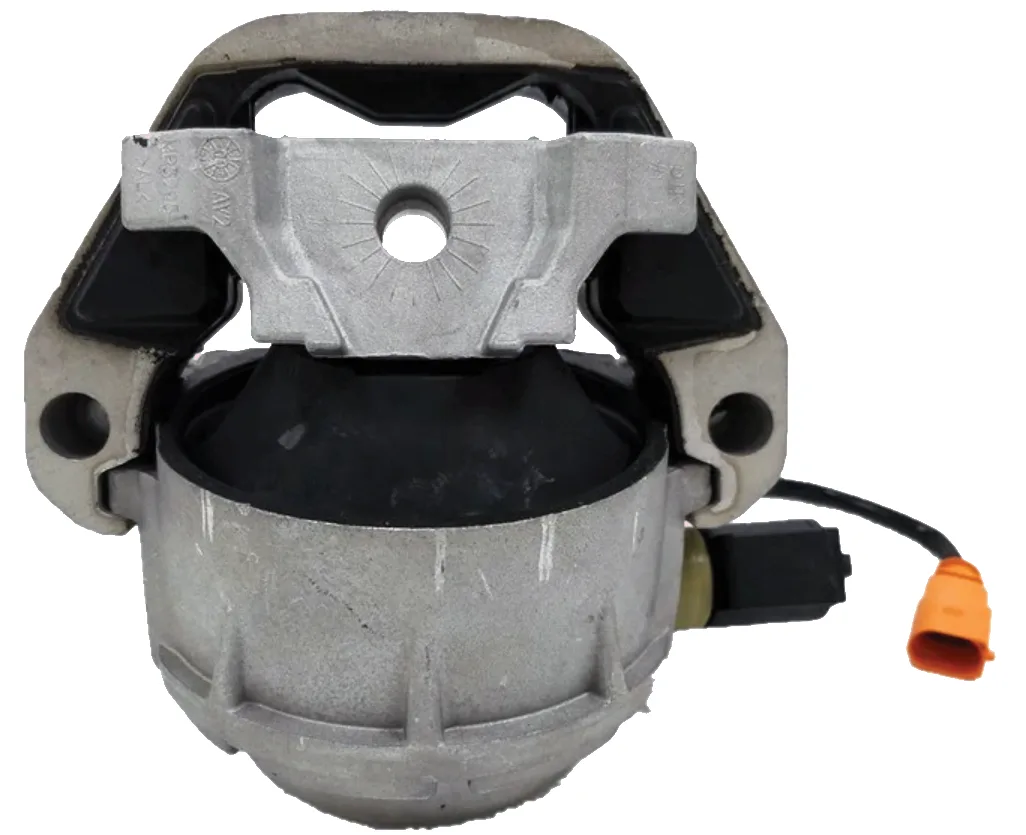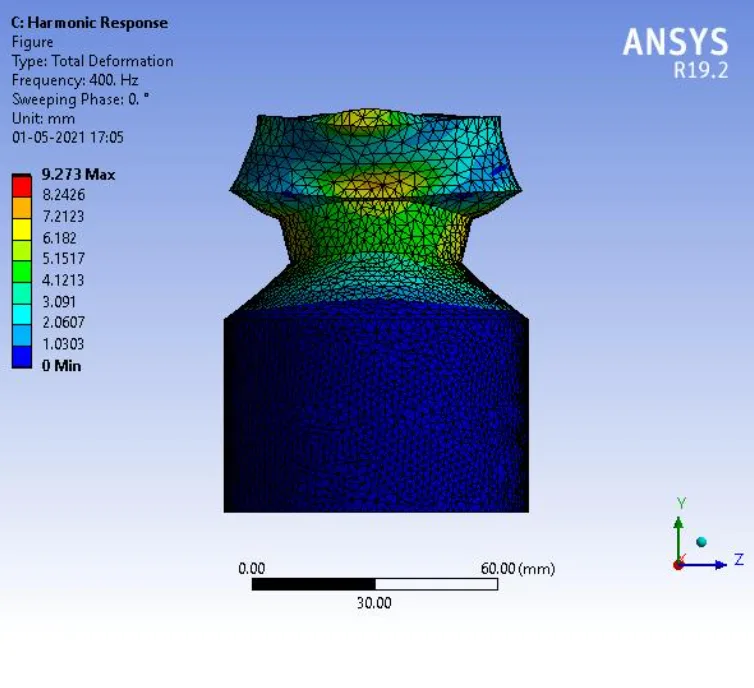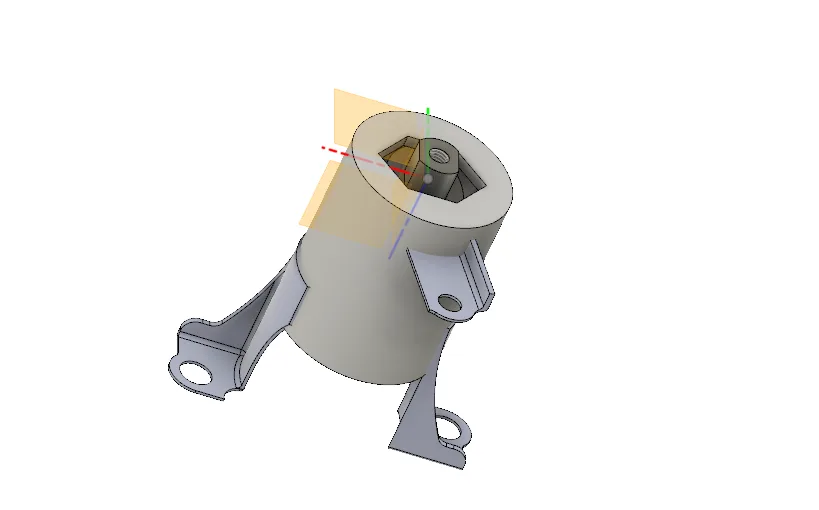
Hydraulic engine mounts are filled with fluid, and everyone says that makes them better. But how much better? To find out, we put two samples of the same mount on a universal testing machine (UTM): one with an empty chamber, one filled with fluid.
How the fluid helps
When a vertical load pushes down on the rubber, the rubber compresses. In a hydraulic mount the chamber below is full of fluid (a glycol-based mixture of ethylene glycol and propylene glycol). The fluid cannot be squashed, so it is forced through a small orifice and pushes the rubber diaphragm back up. In simple terms: to move the rubber the same distance, a hydraulic mount needs more force.
The test
We first loaded the mount with an empty chamber and measured how far it deflected. Then we filled the second sample with fluid and increased the load until it deflected by exactly the same amount.
The result
| Sample | Force applied | Deflection |
|---|---|---|
| Without oil | 200 kgf | 21.8 mm |
| With oil | 237 kgf | 21.8 mm |
For the same 21.8 mm of movement, the filled mount needed 37 kgf more force, which is roughly 18% more. The fluid measurably increases the load the mount can carry for a given deflection.
What this means on the road
- A hydraulic mount resists large engine movements (starting, braking, gear changes) more firmly than a plain rubber mount of the same size.
- It still lets the fine vibration at idle be absorbed by the rubber, which is why the cabin stays quiet.
- If a hydraulic mount leaks its fluid, it loses this extra resistance and behaves like a tired, soft rubber block. That is when the knocking and shaking begin.
Note: this was a lab comparison on one pair of samples, meant to show the effect of the fluid rather than to rate a particular product.
This article is based on the B.E. Mechanical Engineering project “Design, Fabrication and Analysis of Engine Mountings” by Bhavya Madhani, Devesh Parwal, Manraj Chandhok and Rhys Rodrigues, guided by Prof. Prashant Frank Crasta.